
OVERVIEW
Higher Diploma in Healthcare and Social Care Management
The Higher Diploma in Healthcare Management and Social Care Management equips learners with essential knowledge and practical skills to support and lead within diverse health and social care environments. Spanning critical themes such as patient safety, communication, ethical practice, and leadership, the course prepares students to manage services that promote well-being, dignity, and quality care. Combining theoretical foundations with practical modules—including occupational health, mental health, teamwork, and policy—the programme reflects the integrated and interdisciplinary nature of modern health and social care systems.

12 months | Full-time
12 months |Part-time

Practical and theoretic modules

Guided career sessions
MODULES
A programme to designed to explore beyond subject knowledge
Graduates of this Higher Diploma programme will be well-positioned to assume a range of roles across hospitals, community health settings, nursing homes, voluntary welfare organisations (VWOs), eldercare centres, and integrated health and social service agencies.
Introduction to Occupational Health and Safety
This module aims to introduce the principles of occupational health and safety within healthcare and social care settings, focusing on risk prevention, legislation, and promoting a safe working environment.
Effective Communication in Healthcare & Social Care Teams
This module aims to develop learners’ communication competencies for interacting effectively with patients, families, and multidisciplinary care teams.
Patient Safety, Disease Prevention, and Healthcare Quality
This module aims to explore systems and practices that enhance patient safety, promote disease prevention, and improve healthcare quality.
Mental Health and Distress: Theory and Practice
This module aims to examine theoretical frameworks and practical responses to mental health and emotional distress in diverse care populations.
Facilitating Life Review Conversations for Dementia Patients
This module aims to develop skills for supporting individuals with dementia through reflective, life-review conversations that promote well-being and identity.
Medical Ethics, Health Economics, and Environmental Sustainability
This module aims to explore the interplay between ethical decision-making, economic priorities, and environmental sustainability in healthcare.
Integrated Health Systems
This module aims to examine the structure, functions, and coordination of integrated health and social care systems for improved service delivery.
Health Care Ethics: Policy and Management Perspectives
This module aims to provide insights into ethical issues and dilemmas arising from healthcare management and policy-making processes.
Nursing Adult, Child, Mental Health and Learning Disabilities Practice
This module aims to explore principles and practices in nursing care across various populations, including adults, children, and individuals with mental health conditions or learning disabilities.
Clinical Decision Making in Providing and Evaluating Care
This module aims to enhance learners’ abilities to make sound clinical decisions based on evidence, patient needs, and reflective practice.
Health Care Teamwork Practice & Leadership
This module aims to develop teamwork and leadership skills essential for managing and motivating healthcare teams effectively.
Industrial Attachment (IA) Briefing
The IA Briefing is a preparatory module designed to equip students with the essential knowledge and expectations before commencing their Industrial Attachment. This module outlines workplace protocols, professional conduct, safety standards, and reporting requirements. As a pass/fail component, successful completion is based on attendance, participation, and understanding of placement responsibilities. It ensures that students are fully prepared to enter their placement sites with confidence and professionalism.
Industrial Attachment
The Industrial Attachment provides learners with hands-on experience in real-world healthcare or social care settings. It bridges classroom learning with practical application, enhancing job readiness. Students gain exposure to professional practices, develop workplace competencies, and build confidence by applying their skills under supervision in actual care environments. LSBF will extend its placement network to include social work practice with opportunities across local agencies, public healthcare institutions, and both private and voluntary sector organisations. Where possible, placements are thoughtfully matched to align with each student’s interests and future career goals, considering their final placement preferences to ensure meaningful and relevant industry exposure.
Students enrolled in the Higher Diploma in Healthcare and Social Care Management in Singapore are generally required to undergo specific health screenings and vaccinations, particularly this course includes clinical placements or if any direct patient interactions. These requirements are in line with guidelines set by the Ministry of Health (MOH)
Scientific Research Methods and Data Analytics
This module will introduce you to various types of scientific research, including systematic reviews, bioinformatics, and pedagogic studies, in addition to traditional lab and field-based research. You will gain an understanding of different experimental designs, which will be essential for your final year projects and further postgraduate studies. The module will focus on data analysis, teaching you how to perform statistical tests and interpret the results in the context of biological research. Assessments will include a group task where you critically evaluate a research paper and present it at an online conference, as well as two individual assessments based on a given dataset.
By the end of the module, you will have developed the skills needed for your final year research projects. The aim of this module is to develop research and analytical skills that are valuable across a wide range of life science disciplines and transferable to various professional careers.

Full programme structure and learning outcomes
Get detailed breakdowns and learn about the advantages of learning with LSBF Singapore.
what to expect
Kickstart Your Career in Healthcare & Social Care
Programme Aims
The Higher Diploma in Healthcare Management and Social Care Management equips learners with essential knowledge and practical skills to support and lead within diverse health and social care environments. Spanning critical themes such as patient safety, communication, ethical practice, and leadership, the course prepares students to manage services that promote well-being, dignity, and quality care. Combining theoretical foundations with practical modules—including occupational health, mental health, teamwork, and policy—the programme reflects the integrated and interdisciplinary nature of modern health and social care systems.
Students will explore specialised areas including dementia care, environmental sustainability in healthcare, decision-making in clinical practice, and contemporary healthcare ethics. The programme concludes with either an industry attachment or a capstone research and data analytics project, enabling applied learning in real-world or analytical contexts.
Learning Outcomes
Graduates will be able to:
- Demonstrate foundational understanding of occupational health and safety principles and apply them to ensure safe care environments for patients and staff.
- Communicate effectively within healthcare and social care teams, using appropriate interpersonal strategies to support collaboration, coordination, and compassionate care.
- Apply key concepts of healthcare quality, disease prevention, and patient safety in evaluating and improving service delivery in health and social care settings.
- Analyse ethical dilemmas, health policies, and sustainability challenges in healthcare systems to support responsible and informed managerial decisions.
- Develop and reflect on practical skills in clinical decision-making, dementia care, and leadership during either an industrial placement or a data-driven research project.
Skills you will acquire

$4,050
median Singapore salary for Health Sciences
92%
Student passing rate
MOE GES 2025 – Health Sciences
programme structure
mode of delivery
Lectures, Tutorial, Seminars, Workshops, Case study and Exercises, Group work project and presentations, Consultation, Class Discussion
Assessment Methods and Graduation Requirements
Assessment Methods:
Continuous assessment, Formative and Summative Assessments
Any combination of class participation, group or individual assignments, online quizzes/online tests, portfolios, written exams etc.,
Graduation Requirements:
Students must complete and pass all required modules in this programme to receive the graduation certificate.
Attendance Requirements
International Students: 90%
Local, PR, non-student pass: 75%
Teacher student ratio
1: 40
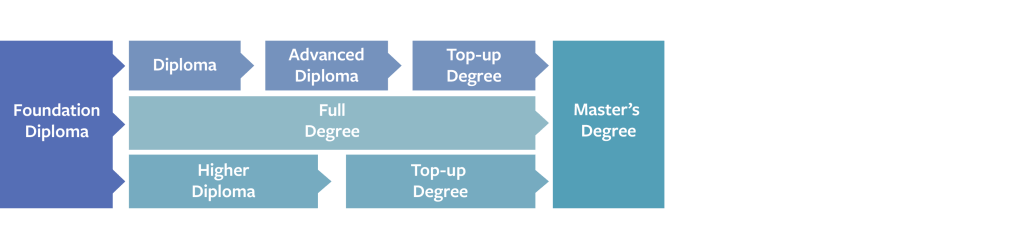
Progression Pathway @ LSBF Singapore Campus
THE LSBF DIfference
More Than a Qualification. An Employability Advantage.

Industry-Relevant Learning
Programmes built around the skills, technologies and capabilities relevant to today’s workplace.

Global Immersion
Take your learning beyond Singapore with opportunities for immersive experiences in Kuala Lumpur and/or Shanghai.

International Faculty
Learn from faculty and practitioners who bring international academic and professional perspectives into the classroom.

AI Integrated into Learning
Don’t just study AI. Learn to work with it. AI tools, applications and AI-enabled ways of working integrated across the LSBF learning experience.

Industry in the Classroom
Learn beyond textbooks through industry participation in programme delivery, including select modules delivered by Industry Professionals.

The LSBF Trust
A global education brand with an established international footprint, academic partnerships, industry relationships and thousands of learners worldwide.
ELIGIBILITY
Who can apply for this programme
entry requirement
Local students shall possess one of the following:
- Three passes in GCE A Level Examinations including two Science subjects or
- International Baccalaureate (24 points) or
- Local Polytechnic Diploma or any other relevant diploma in any engineering or science related field or
- Vocational Diploma in relevant field of study; or
- Other equivalent qualifications
International students shall possess one of the following:
- Completion of Year 12 High School Qualification in science subjects or equivalent qualification from respective home countries and will also need: year 10 Maths; or
- Completed International Baccalaureate (24 points); or
- Equivalent Polytechnic Diploma in any engineering or science field in respective home countries; or
- Vocational Diploma in a relevant field of study; or
- Other equivalent qualifications.
Minimum English Language Entry Requirement
Both local and international students MUST fulfil the minimum English language entry requirement of one of the following:
- Achieved a grade C6 or better in English language O level; or
- Pass in English Language in Year 10 High School qualification or equivalent; or
- IELTS 6.0/TOEFL 79 on the iBT; or
- Completed LSBF Preparatory Course in English Advanced Level; or
- Dynamic Placement Test or Duolingo 90-115 test score.
Students with non-standard entry requirements (e.g., other PEI qualification, lack of equivalent Year 12 in home country, Mature candidates will be assessed on a case-by-case basis through LSBF internal placement test and oral assessment subject to approval of the Academic Board.
Minimum Age
- 18 years or above



TUTION FEES
SGD $13,625.00
(local students)
SGD $16,568.00
(international students)