
OVERVIEW
About this Programme
BSc (Hons) Biomedical and Health Sciences is designed to address the growing need for graduates with a broad, interdisciplinary understanding of human health and disease, extending beyond the remit of traditional Biomedical Science programmes. The curriculum is structured to build strong scientific foundations, develop applied biomedical and health care understanding along with research capability, and culminate in advanced, future-focused biomedical and public health topics.

University of Roehampton named University of the Year
Ranked #3 in London for University of the Year

Guided career sessions
MODULES
Make a difference to human lives by exploring the science behind health, disease, and the treatment and prevention of illness.
The curriculum emphasises research literacy, critical evaluation, ethical awareness, and transferable skills, ensuring alignment Biosciences and Health-related disciplines. Graduates are prepared for a wide range of employment and postgraduate opportunities, rather than a single statutory career pathway. By integrating biomedical sciences with health sciences rather than focusing on clinical laboratory accreditation, the programme offers a flexible, contemporary alternative for students who are passionate about health, disease prevention, and biomedical research.
Introduction to Biomedical Concepts
In this module, students will be introduced to an understanding of the chemical, cell and tissue organization of the human body and of disease-causing organisms, as a foundation of modern diagnostics and biomedicine. You will gain practical experience in various laboratory techniques for the rigorous and effective analysis of various diagnostic specimens.
Fundamentals of Life Sciences
The aim of this module is to introduce you to the key concepts and core foundations for the scientific study of life. A strong interprofessional ethos is built by bringing you and other students together and creating the opportunity to interact with and learn alongside students from a breadth of professional programmes.
Molecular Biology and Genetics
This module offers a foundational introduction to molecular biology within Biomedical and Health Science and other biological sciences. You will study the chemical structure and function of DNA, RNA, and proteins, gaining insight into how genetic information is stored, transmitted, expressed, and regulated in prokaryotic and eukaryotic cells. Core topics include DNA replication, transcription, translation, the Genetic Code, and the Central Dogma of Molecular Biology.
Professional Skills
This interprofessional module introduces you to the foundational academic, professional, and personal skills needed to succeed in university in your chosen field of study. Through learning with and from peers across disciplines, you will explore what it means to be a professional within ethical, legal, and regulatory frameworks relevant to your programme.
Diet and Lifestyle for cardiometabolic disease
In this module, students will explore the pathology of cardiometabolic diseases, and how diet and physical activity are linked to the aetiology of obesity, diabetes, hypertension, cardiovascular disease and even cancer.
Infection and Immunity
Immunology is central to biomedicine and other biosciences, because the immune system is essential in maintaining health by fighting infections. You will draw on Level 4 foundations to explore how the immune system develops, how its components are distributed throughout the body, and how immune cells and molecules contribute to defences against infectious agents.
Medical Microbiology
This module builds on foundational microbiology and cell biology covered at Level 4 and provides essential background for advanced modules in clinical pathology, immunology, and molecular diagnostics. It aligns with IBMS professional accreditation requirements and supports the development of competencies needed in clinical laboratories, public health, research, and pharmaceutical industries.
Research Methods for the Life Scientist
In this module, students will develop the critical awareness and practical skills needed to evaluate data and understand research study design. Students will explore both quantitative and qualitative approaches, learn how to analyse and present data, and engage critically with scientific and non-scientific literature.
Optimising Nutrition care
Throughout the module students are encouraged to contribute to discussions regarding current topics in clinical nutrition, inclusive of digital health technologies, environmental sustainability and global influences. Students will be required to consider professional standards of ethics, conduct and performance, applied to nutrition communication and practice. Students’ learning will be grounded in professionally focused education and evidence-based practice.
Advanced Topics in Biomedical Science
This module explores cutting-edge developments and emerging challenges in biomedical science. Students will be equipped with an in-depth understanding of advanced concepts, technologies, and applications that drive current biomedical research and clinical innovation. The module is designed to bridge students’ foundational biomedical knowledge with translational research and real-world applications in healthcare, diagnostics, and therapeutics. Topics include but are not limited to gene editing and CRISPR technologies, multi-omics and systems biology, regenerative medicine, personalised/precision medicine, artificial intelligence in biomedical research, bioethics, and the societal impact of emerging biotechnologies.
Public Health
This module deals with public health and health promotion including concepts and issues within contemporary theory and professional practice. The module will provide students with a critical theoretical and empirical basis for understanding health and health promotion in the public arena. Students will examine the importance of public health and health promotion initiatives with their social, political and practical implications, drawing on global examples.
Students will look at lifestyle and the prevention of chronic disease, specifically diabetes and cancer planning, and evaluating public health initiatives, for example promoting health through exercise, aging and health promotion etc.
Applications of Research
This module provides students with the opportunity to acquire a coherent and detailed understanding of a specialist research topic. Students will carry out a sustained and rigorous research project in which students rigorously deploy scientific techniques of investigation and analysis. Students will select suitable research project topics in consultation with their supervising tutor and are expected to carry out the project.

Request more information
Get details and learn about the advantages of learning with LSBF.
what to expect
Work on real-world problems
Programme Aims
This programme offers a flexible and future-ready approach to biomedical and health sciences, combining a modern, integrated curriculum with the development of versatile skills. It prepares graduates for diverse pathways across health and science fields, equipping them with the knowledge and adaptability needed for evolving career opportunities.
Learning Outcomes
Research and Scholarly Practice
Graduates will be able to:
Integrated biomedical and health science knowledge alongside strong analytical and research capabilities. Students will cultivate professionalism, ethical awareness, and effective communication skills, while building adaptability for employment across research, healthcare, industry, and education sectors.
Theoretical and Conceptual Knowledge
Graduates will demonstrate the ability to:
Explain core biomedical concepts underpinning human health and disease, from molecular to systemic levels, while critically evaluating the role of immunity, nutrition, lifestyle, and public health in disease prevention and management. Students will develop an integrated understanding of biomedical sciences within broader health and population contexts, and gain the ability to assess contemporary biomedical health research alongside emerging scientific developments.
Professional and Interpersonal Competence
Graduates will be equipped to:
Develop key transferable skills such as communication, teamwork, empathy, resilience, digital literacy, and the ethical use of AI, all essential for academic success and professional development. They will reflect on their beliefs, values, and experiences to build self-awareness and begin shaping their professional identity.
Reflective and Integrative Practice
Graduates will also develop:
Employability and lifelong learning, equipping students with transferable skills such as communication, digital information literacy, and teamwork, as well as reinforcing professionalism and ethical awareness in research, practice, and communication
Skills you will acquire
$4,200
median Singapore salary for Health Sciences
91%
Student passing rate
MOE GES 2025 – Sciences
programme structure
attendance requirements
International Students: Full-time Day 90%
Local domestic students: Full-time Day and Evening 75%
Teacher student ratio
1:100
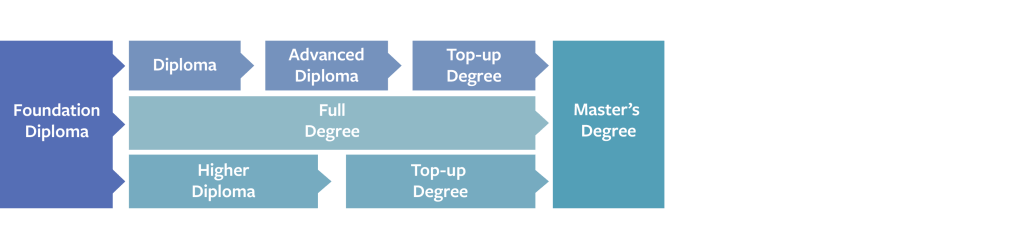
Progression Pathway @ LSBF Singapore Campus
THE LSBF DIfference
More Than a Qualification. An Employability Advantage.

Industry-Relevant Learning
Programmes built around the skills, technologies and capabilities relevant to today’s workplace.

Global Immersion
Take your learning beyond Singapore with opportunities for immersive experiences in Kuala Lumpur and/or Shanghai.

International Faculty
Learn from faculty and practitioners who bring international academic and professional perspectives into the classroom.

AI Integrated into Learning
Don’t just study AI. Learn to work with it. AI tools, applications and AI-enabled ways of working integrated across the LSBF learning experience.

Industry in the Classroom
Learn beyond textbooks through industry participation in programme delivery, including select modules delivered by Industry Professionals.

The LSBF Trust
A global education brand with an established international footprint, academic partnerships, industry relationships and thousands of learners worldwide.
ELIGIBILITY
Who can apply for this programme
Minimum Academic Entry Requirement
Academic:
- 112-128 UCAS points;
- A level Biology or Chemistry or equivalent BTEC subjects;
- GCSE Grade C/4 Maths or equivalent
Recognition of Prior Learning (RPL) or Accreditation of Prior Learning (APL)
The University recognises that applicants may have acquired relevant academic qualifications and credits through prior study undertaken at other recognised institutions. In accordance with institutional policies on Recognition of Prior Learning (RPL) and Accreditation of Prior Learning (APL), such prior certificated learning may be considered for advanced entry or credit transfer onto the BSc (Hons) Biomedical and Health Science programme.
All applications for RPL/APL are assessed on a case-by-case basis to ensure that prior learning is current, relevant, and comparable in content, level, and volume to the learning outcomes of the programme. The following qualifications are indicative of prior learning that may be considered:
LSBF Higher Diploma in Biomedical Sciences
- Applicants achieving 70% or above may be considered for entry to Level 6, subject to mapping of prior learning and programme compatibility.
LSBF Diploma in Biomedical Sciences
- Holders of this qualification may be considered for entry to Level 5, subject to review of academic content and learning outcomes.
Singapore polytechnic diploma
- This is three-year diploma programme, therefore students in biomedical science related subject areas (such as health sciences) can enter into level 6
- Those taking common biology programmes or other STEM or Non-STEM programmes are expected to take three bridging modules from LSBF Diploma course.
Decisions regarding advanced standing or credit exemption will be made in accordance with university regulations, ensuring that students admitted with prior learning are able to engage successfully with the academic and scientific demands of the programme.
We can also recognise qualifications and credits students might have gained elsewhere, which may then count towards their degree (subject to case-by-case analysis)
Both local and international students MUST submit their personal statement, two references and or CV (if available).
Students with non-standard entry requirements (e.g. other PEI qualification, lack of equivalent Year 12 in home country, etc.) will be assessed on a case-by-case basis subject to approval of UOR.
Minimum English Language Entry Requirement
Both local and international students MUST fulfil the minimum English language entry requirement of one of the following:
- GCSE at Grade C or better in English language O level
- IELTS Academic score of 6.0 overall with at least 5.5 in each component
- TOEFL 80 overall with a minimum of 17 in listening and writing, 18 in reading and 20 in speaking
- Hong Kong Level 4 (syllabus B) in the HKCEE
- Indian Standard XII 70%
- Malaysia grade C or better in English language (1119) in SPM
- Sri Lanka grade C Sri Lankan A-level
- Completed LSBF Preparatory Course in English Upper Intermediate Level
- Dynamic Placement Test (DPT) B2-C2
Minimum Age
18 years or above




TUTION FEES (Price inclusive of GST)
(Year 3 Entry – Top-up)
SGD $14,170.00
(local students)
SGD $17,440.00
(international students & progression)
(Year 1 Entry)
SGD $42,510.00
(local students)
SGD $34,880.00
(international students & progression)
FAQs
Is this programme eligible for SkillsFuture (SSG) or Post-Secondary Education Account (PSEA) funding?
SkillsFuture (SSG) and Post-Secondary Education Account (PSEA) funding are currently applicable only to selected programmes offered by public institutions such as NUS, NTU, and SMU. While this programme is not covered under those schemes, we’re pleased to offer exclusive rebates and promotional rates. To learn more about the available fee support and eligibility, please contact our Education Consultants at +65 6580 7700 or get in touch here.
What can I study after this degree?
You may pursue executive education, niche professional certifications, or consider doctoral-level studies such as a DBA or PhD.
How do I get started?
Reach out to our education consultants at +65 6580 7700 or visit us at 80 Robinson Road, #01-00, Singapore 068898. We’re here to help you plan your next step.